-
Sale!
 Fiona Hawthorne was six when her family moved to Hong Kong, where she was immediately inspired by the irresistible energy and bustle of the vibrant cityscape around her. Then, when she was a 22-year-old artist, she ventured into a place that everyone told her was lawless and dangerous: the Kowloon Walled City. But she spent time getting to know the people who lived there, and with her pencils and paints she sketched their everyday lives. She found that the infamous city was in fact industrious, child-friendly and welcoming. Based on Fiona’s real-life experiences in the famous Walled City of Kowloon in the 1980s, these books are for both children and adults. Buy this bundle to get 20% off. Click the covers below to read more about each book.
-
Sale!
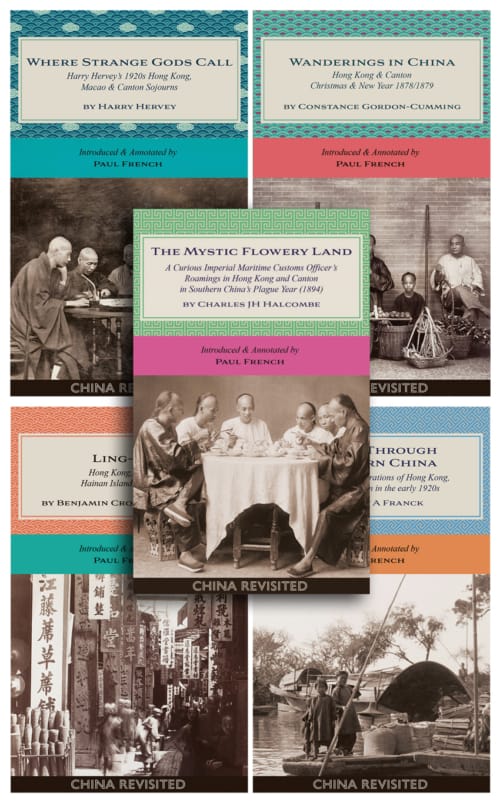
 China Revisited is a series of extracted reprints of mid-nineteenth to early-twentieth century Western impressions of Hong Kong, Macao and southern China. The series comprises excerpts from travelogues or memoirs written by missionaries, diplomats, military personnel, journalists, tourists and temporary sojourners. They came to China from Europe or the United States, some to work or to serve the interests of their country, others out of curiosity. Each excerpt is fully annotated by Paul French to best provide relevant explications of Hong Kong, Macao and China at the time, to illuminate encounters with historically interesting characters or notable events. Save 20% by buying this bundle which includes the following items in the series. Please click on their titles below to read full details.
-
Sale!

Bestselling author Paul French travels to the most storied cities in China to tell the true tales of fascinating people who visited or lived in these places in the 19th and 20th centuries.
With a special focus on the glamorous years between the world wars, the Destination series describes the local and international assortment of adventurers, writers, spies, artists, socialites and scoundrels who inhabited Macao, Peking and Shanghai during that golden age.
Save 20% by buying this bundle which includes the following books in the series. Please click on their titles below to see full details and read excerpts from each book. -
Sale!
 With a foreword by Professor Robert Bickers
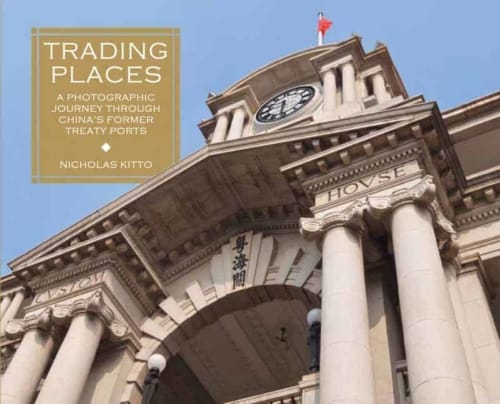
China’s treaty port era extended from the 1840s to 1943, during which time foreigners had a significant presence. This book contains more than 700 photographs of many buildings from this period, most of them commissioned by foreign interests. Many argue that they should never have been built, let alone still be standing. But this book is not concerned with the rights and wrongs of how these buildings came to be. It simply celebrates their existence. A significant number are innately beautiful and all of them embody a history that has clear and present links to our own time and thus remain relevant.
This book was driven by the author’s interest in the history of China’s treaty port era, in which several generations of his family played a part. It is a tribute to the buildings that remain as a reminder of the past, and a guide to where to find them.
-

by Romain Jacquet-Lagrèze, published by Blue Lotus Editions
Lion Rock is not just any mountain. It’s Hong Kong’s most famous peak, laden with symbolism and meanings that are evolving over time. Inspired by Hokusai’s important woodblock series “Thirty-six Views of Mount Fuji” which was created in 1830, Romain set out to capture Hong Kong’s famous peak in a similar yet contemporary fashion, in order to express the many faces of this legendary mountain top.
Lion Rock is featured in each of the photos, some in the far distance obscured by high-rise buildings, traffic or bustling markets. In other images, it is more prominent, far removed from the urban jungle, oozing peace and tranquility. Some photos are shot at the break of day, others during the blue moment at dusk. In short, Thirty-six Views of Lion Rock reads like a letter to the mountain that Hongkongers know and love so well.
-

Dear Hong Kong is a photo book about diversity and identity. This first volume is a snapshot of inspiring people from 80 parts of the world who live in Hong Kong and have contributed to our society. It is a tribute to the unique spirit of Asia’s world city in 2020. Come in and let the colourful human stories of Hong Kong touch you.
Bilingual: English / Traditional Chinese
《鄉港家書》是一本充分展現香港獨有多元文化的相冊。這裡記錄了80個來自不同地方,卻扎根在同一個香港的「異鄉人」的故事,訴說著他們為這城市默默作出的貢獻。我們謹以此書獻給2020年的香港 —— 一個與眾不同的亞洲國際城市。我們被這些故事牽動著心弦,希望讀者也可以像我們一樣,從字裡行間投入書中每個人真摯動容的故事中。
中/英對照
-

The modern game of golf, which originated in Scotland, gradually spread across the globe from the mid-19th century, first to Asia and then to Europe, North America, Oceania and Africa. It has become a popular outdoor sport, a national and international competitive game, and an Olympic event.
The spread of the modern game of golf was a by-product of the British Empire. Golf courses were constructed and clubs established as early as 1829 in India, long before they appeared in mainland Europe. As the British colonial empire expanded into China, Scots arrived in the country as naval officers, consular and customs officials, engineers, doctors, architects, merchants, bankers and accountants, and settled in China’s opening trading ports. Scottish missionaries reached into the Chinese interior to seek new converts for the Lord.
As they became residents in China’s trading ports, they brought along their national game. Almost without exception, early Chinese golf courses and clubs appeared first at the trading ports. Those behind the courses and clubs were overwhelmingly Scots, with some coming directly from the birthplaces of modern golf such as St. Andrews and Carnoustie.
According to our research, the earliest golf course in China appeared in Hankou (Hankow) in 1870 and the earliest golf club was the Hankow Golf Club, incorporated in 1878. This indicates that China was the third country, after only India and France, where the game of golf spread outside the UK. Later, courses and clubs appeared in other Chinese ports: Hong Kong in 1889, Yantai (Chefoo) in 1890, Shanghai in 1894 and Tianjin (Tientsin) in 1895, followed by many others.
The pioneer of the Hankow Golf Club was a Scotsman, James Ferrier. His father had been the founder and captain of the Carnoustie Golf Links. James played from an early age and had honed his golfing skills to the level of a zero handicapper when he arrived in China in the late 1860s. As a marine engineer employed by the China Merchants Steamship Company, Ferrier travelled with his ship up and down the Yangtze River between Wuhan and Shanghai. In 1870, together with a few Scottish friends, he built China’s first rudimentary golf course with only a couple of holes in Hankou and started playing the Royal & Ancient game. Ferrier also built Shanghai’s first golf links of a few holes inside the Shanghai Race Course in 1871.
With the aid of plentiful illustrations, this book tells the story of the first 80 years of golf in China.
-

起源于苏格兰的现代高尔夫运动从 19 世纪中叶逐渐传播到全球,首先是亚洲,然后是欧洲、北美、大洋洲和非洲。它已成为一项流行的户外运动、国内和国际竞技比赛以及奥运会项目。
现代高尔夫运动的传播是大英帝国称霸全球的副产品。早在 1829 年,印度就建造了高尔夫球场和俱乐部,远早于它们出现在欧洲大陆。
随着大英殖民帝国向中国扩张,苏格兰和英格兰人以海军军官、领事和海关官员、工程师、医生、建筑师、商人、银行家和会计师的身份抵达中国,并在中国开放的贸易口岸定居。苏格兰宣教士进入中国内陆,为主寻找新的归信者。
当他们成为中国贸易港口的居民时,他们带来了他们的国民运动——高尔夫。几乎无一例外,早期的中国高尔夫球场和俱乐部首先出现在贸易港口。球场和俱乐部背后的人绝大多数是苏格兰人,其中一些直接来自现代高尔夫的发源地,如圣安德鲁斯和卡诺斯蒂。
据我们研究,中国最早的高尔夫球场1870年出现在汉口(Hankou),最早的高尔夫球会是汉口高尔夫俱乐部,成立于1878年。这说明除印度和法国外,中国是高尔夫运动从英国传向全球的第三个国家。接着,中国其他港口的球场和俱乐部相继出现:1889 年的香港、1890 年的烟台(芝罘)、1894 年的上海和 1895 年的天津(天津),等等。汉口高尔夫俱乐部的先驱是苏格兰人詹姆斯·费利尔。他的父亲是卡诺斯蒂高尔夫球场的创始人和队长。詹姆斯从小就打球,在 1860 年代后期抵达中国前,已经将自己的高尔夫球技巧磨练到零差点的水平。作为招商局轮船公司的一名轮机工程师,费利尔经常往来于武汉和上海之间。1870年,他与几位苏格兰朋友一起,在汉口建造了中国第一个只有几个洞的简易高尔夫球场,并开始打皇家古老游戏。费利尔 1871 年又在上海赛马场内,建造了只有几个洞的高尔夫球场。
本书借助大量的插图,讲述了中国高尔夫运动最初80年的故事。 -
 by Simon Go Hong Kong Apothecary transports us to the world of Chinese medicine—a place of gou (plasters), daan (pellets), yun (pills), saan (powders), leung cha (herbals teas), yau (medicinal oils), zau (wine) — cures for every known ailment from indigestion to impotency. Author Simon Go combed manufacturers, shops and home medicine cabinets for four years. He interviewed numerous practitioners and manufacturers of herbal medicine and collected the most compelling examples. The result is a visual cabinet of curiousities, a graphical pharmacopoeia. Richly illustrated with over 700 graphical design motifs, this book takes us through the evolution, diversity and creativity of Chinese medicinal packaging. Many of these medicines are no longer produced, making Hong Kong Apothecary a memoir of a rapidly disappearing culture.
-

Photographs by Melville Jacoby / Text by Bill Lascher / Foreword by Paul French
A Danger Shared: A Journalist's Glimpses of a Continent at War provides a searing visual history of Asia during World War II as seen by foreign correspondent Melville Jacoby.
In this meticulously curated collection of never-before-seen images, readers experience glamorous Macau soirées, visit Guangxi farms, and witness wartime Chongqing’s wreckage and resilience. Along the way, Jacoby treats Filipino fishermen and Hanoi flower-sellers with the same care as the Soong sisters, Chiang Kai-Shek, and other icons.
Through scenes of everyday friendship, toil, and commerce alongside bombed classrooms, anxious refugees, and exhausted soldiers, A Danger Shared documents humanity’s persistence at a cataclysmic historical moment.
Look inside this book:
Introduction