-
 “Failed in London, Try Hong Kong” Peter Olsen’s life story is one of resilience, reinvention and transformation. Born in London in 1942, in the middle of World War II, Peter’s formative years in post-war Britain could almost be described as Dickensian. With a bigamist father on the run and the untimely death of his mother, Peter faced a tumultuous childhood in a two-room cold-water flat. Despite abject poverty, violence, family dysfunction and occasional homelessness, he found solace and purpose in music, literature and sports, excelling in soccer and cricket. For Peter, who was painfully shy and lacking in self-confidence, the “Swinging Sixties” involved several failures to launch, including a disastrous stint in the police force. But he found his footing working for the maker of Matchbox toys. In 1972, Peter’s career with the iconic toy company took him to Hong Kong with his wife and young family. Then, just as he was adjusting to this strange new life and unfamiliar culture, Matchbox declared bankruptcy, leaving him stranded without income or housing. Undeterred, he turned this crisis into an opportunity, founding his own company. Drumwell grew into a trusted manufacturing agent for major global toy brands, eventually becoming a US$95 million enterprise with more than 200 employees. While professionally successful, Peter’s personal life began to unravel. The time and global travel demands of building his business had taken a relentless toll on his family relationships. At 52, he succumbed to the pressures of his high-stakes life, turning to cocaine – a decision that marked the beginning of a six-year descent into addiction. The cost was devastating: the collapse of his marriage and irreparable damage to his business, resulting in personal loss along with reputational and financial ruin. In 2001, after hitting rock bottom, Peter sought help at a rehab facility in the UK, embracing a 12-step programme that transformed his life. Defying the odds, Peter has never relapsed, maintaining 24 years of continuous sobriety. His commitment to recovery inspired him to found Cocaine Anonymous in Hong Kong, offering hope and support to others battling addiction. Today in recovery, he is an active supporter of several charities close to his heart, and is a sought-after speaker on recovery, captivating audiences worldwide with his raw, honest storytelling. Drawing from his own journey, he inspires others to embrace gratitude, forgiveness and resilience as tools for overcoming adversity and creating meaningful change. Peter has also dedicated his life to philanthropy, vowing to “die broke” by giving to causes he believes in. He supports organisations such as The Teen Project, which aids at-risk youth; the Arsenal Foundation, which empowers under-served communities through outreach activities; the Wallsend Boys Club in Newcastle; and Full Circle in the USA. Peter’s journey – from poverty in post-war London to the heights of business success, followed by a fall into addiction and a powerful redemption – stands as a testament to the strength of the human spirit. Through his steadfast sobriety, his advocacy and his generosity, Peter embodies the belief that no matter how far one falls, it is always possible to rise – and to leave the world a better place for having lived in it.
-
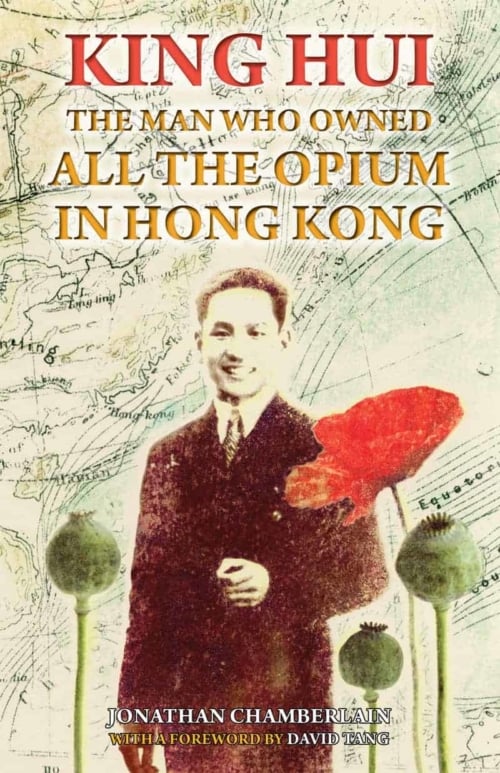
 with a foreword by Sir David Tang From the start of the Korean war to the end of the Vietnam war, Hong Kong was a major R&R centre for soldiers and sailors. And there were thousands of local people who made their money making sure these visitors had a good time and got the suits and the girls they wanted. In fact they didn’t just wait for their customers to arrive – they sailed out in a flotilla of small boats to greet the ships as they entered the harbour. And then, when the ships had anchored, they shimmied up the anchor chain to be the first to get the orders for shirts and trousers. These were the tailor shop order men. Peter Hui was one of them. But who was Peter? What was his story? Well, before he took to being a tailor he had been a famous kung fu fighter; a rich playboy, a frequenter of the pleasure houses of Macau; a gambler (he had run three gambling joints in Canton when the Communists walked in); the brains behind a gang of armed robbers (he alone escaped arrest when their third robbery went wrong); an associate of triads – and, before all that, he had been the owner of the biggest string of Mongolian ponies at the Hong Kong Jockey Club – that was during the war years when he was a leading collaborator of the Japanese. He had once, for a very short time, owned all the opium in Hong Kong! Later, after his tailoring days had gone flat, he was paid by a CIA officer to report on events in China. This was during the tumultuous years of the Cultural Revolution, when Red Guard factions fought amongst each other. Some periods in history are best illuminated by the stories of men and women who lived through them. This is one of those stories. As we follow Peter’s life – his ups, his downs – we see in sharp focus what it was like to be a Chinese man in the British colony of Hong Kong through most of the years of the 20th century. This is the true, bizarre story of a man who knew everybody and saw everything. He wasn’t a wicked man. He was just trying to get by, like everyone else. This is his truly fascinating story. And yet this book is not just one man’s story. It is the story of a time and place – colonial Hong Kong, Portuguese Macau and the south China hinterland between Hong Kong and Canton – seen from the unique point of view of a man who was at home at all levels of society. There are, for example, no other published accounts of the Japanese occupation of Hong Kong as seen from the non-combatant Chinese perspective. The World of Suzie Wong was a best-selling novel in the 1960s – and this story is its background. If Suzie had been a real girl, Peter would have known her. Look inside this book Click on the following link to view sample pages from King Hui. You will need a pdf reader to view this excerpt. Introduction